COOKING THE CUT · PORTERHOUSE

DRY AGED PORTERHOUSE STEAK

PRIME STEAKS

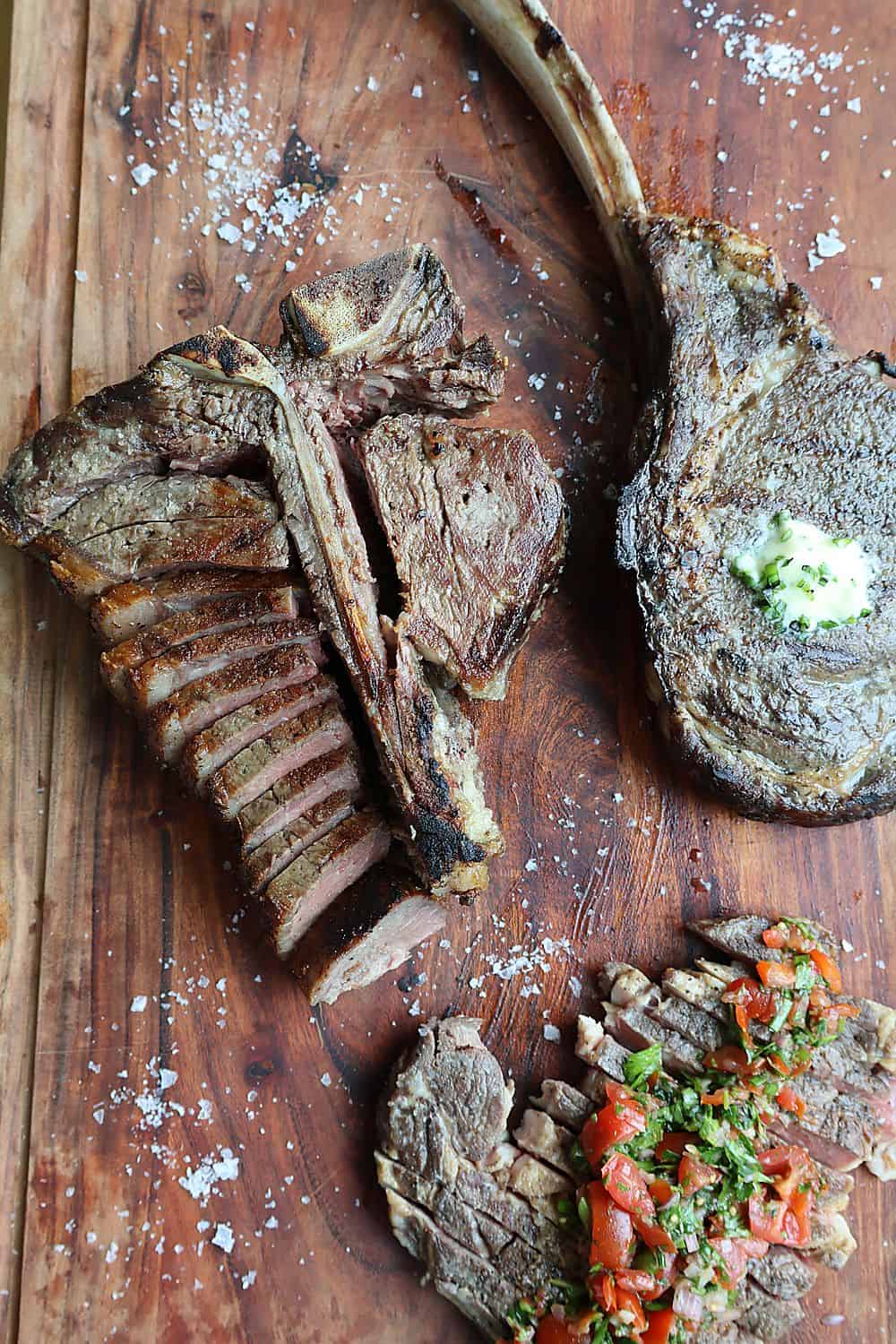
Sliced dry aged porterhouse steak on an end-grain wood board with the T-bone visible, garlic confit cloves, compound butter, and Florida Pure Sea Salt flakes

Fresh from the butcher counter to the beach house kitchen — a hand-selected, bone-in dry aged porterhouse, cut thick for the cast iron. The flavor is older, deeper, more itself. The method stays simple. By the end of the night, the board is passed around, the last slices disappear, and even the bone doesn’t make it back to the kitchen.

WHAT MAKES THIS CUT SPECIAL

Dry aged · cast iron · built to share

  • A New York strip and tenderloin, together on one beautifully marbled bone.
  • Hand-selected from the Pine Avenue butcher counter and dry aged for 28 days.
  • Just kosher salt. A hot cast iron pan. Nothing more standing between you and dinner.
  • A deeply caramelized crust without leaving the island.
  • The thermometer handles the timing. You enjoy the evening.
  • Built for slow Saturdays, open windows, and one more bottle of wine.

INGREDIENTS

  • 3-inch dry aged bone-in porterhouse steak (28-day age minimum, longer if your butcher will let you wait)
  • Kosher salt for the dry brine
  • Florida Pure Sea Salt Pure Flaked (finishing salt)

Porterhouse — From Oven to cast iron

HOW TO REVERSE SEAR A DRY AGED PORTERHOUSE

LOW HEAT · HOT FIRE · SERVE IMMEDIATELY

Salt the night before. Let gentle heat do the cooking. Finish in hot cast iron. Rest, slice, and pass the board around.

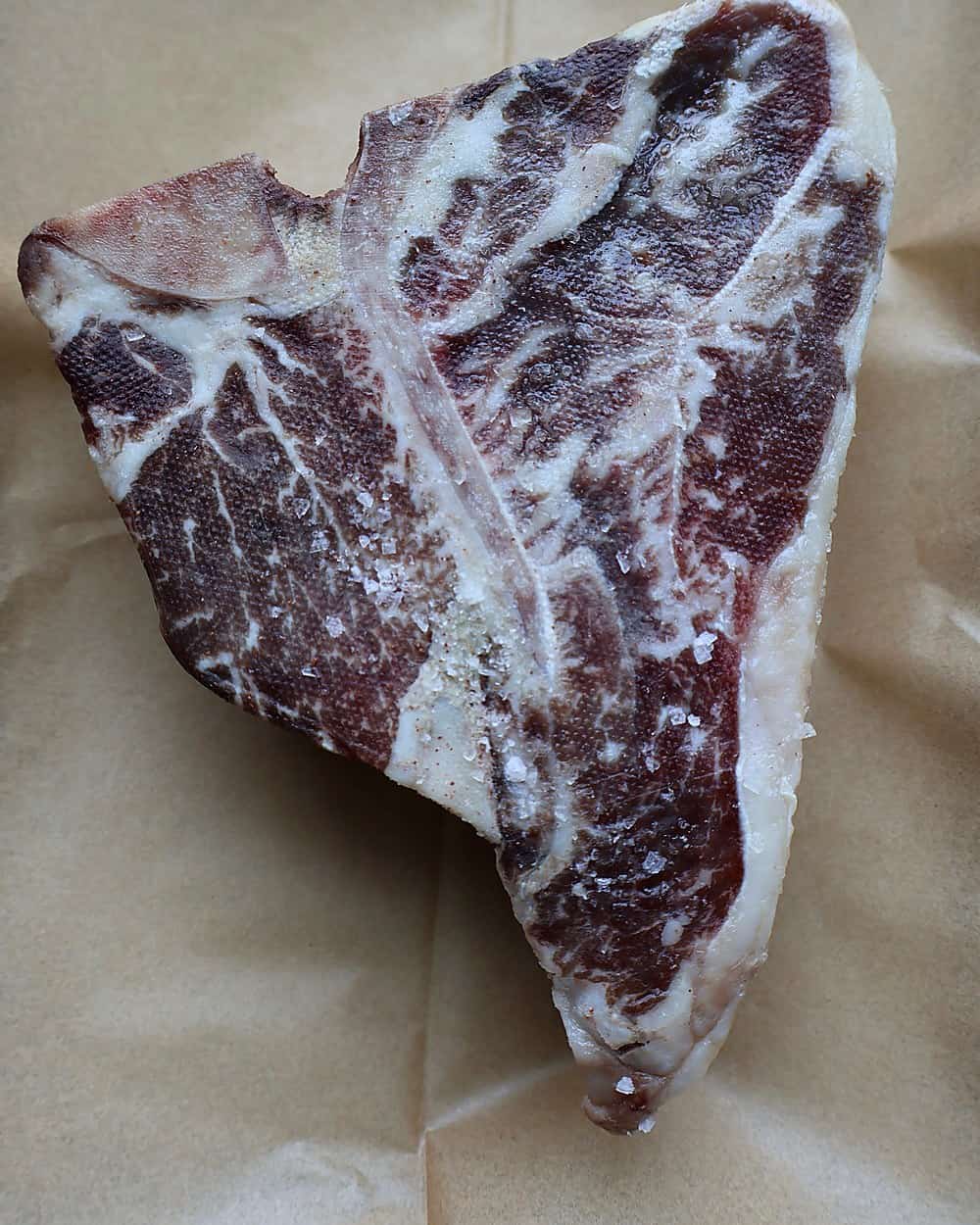
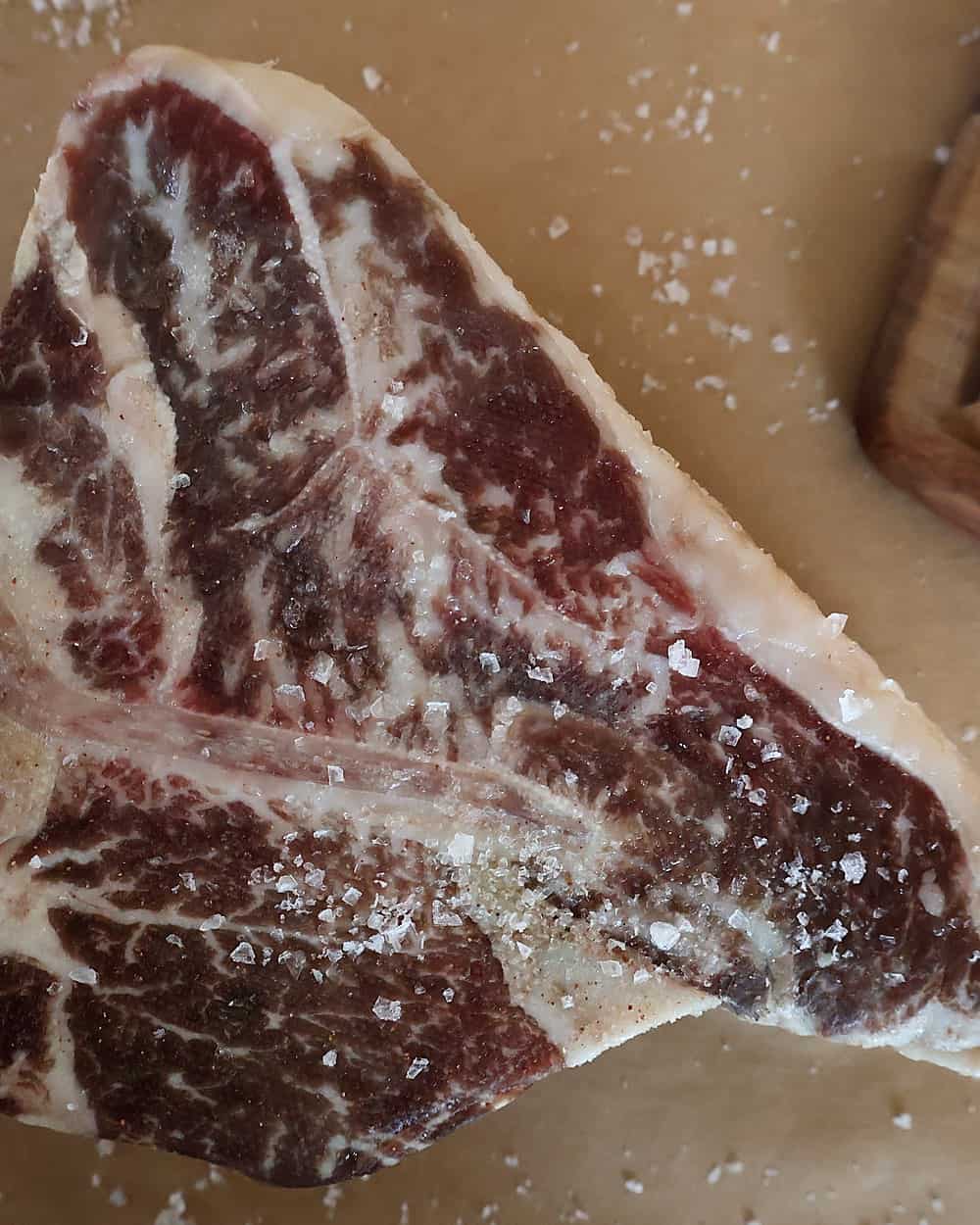
Dry aged porterhouse steak salted heavily on a wire rack over a sheet pan, dry brining in the fridge

STEP ONE

Dry Brine the Night Before

Pat the porterhouse dry. Season heavily with kosher salt on all sides. Set the steak on a wire rack over a rimmed sheet pan and slide it into the fridge, uncovered, for 12 to 24 hours. The salt opens the cut, then re-settles in. The surface dries into the kind of skin that browns the moment it meets the pan.

3-inch dry aged porterhouse on a wire rack in a 225°F oven with a leave-in probe in the strip side, then tented under foil while a cast iron skillet smokes on the cooktop

STEP TWO

Reverse sear

Pull the porterhouse from the fridge an hour before you cook. Heat the oven to 225°F. Set the steak on a wire rack over a sheet pan, slide it in with a leave-in probe planted in the thickest part of the strip, and walk away. Pull when the probe reads 105°F. Move the steak to a cutting board and let it rest.

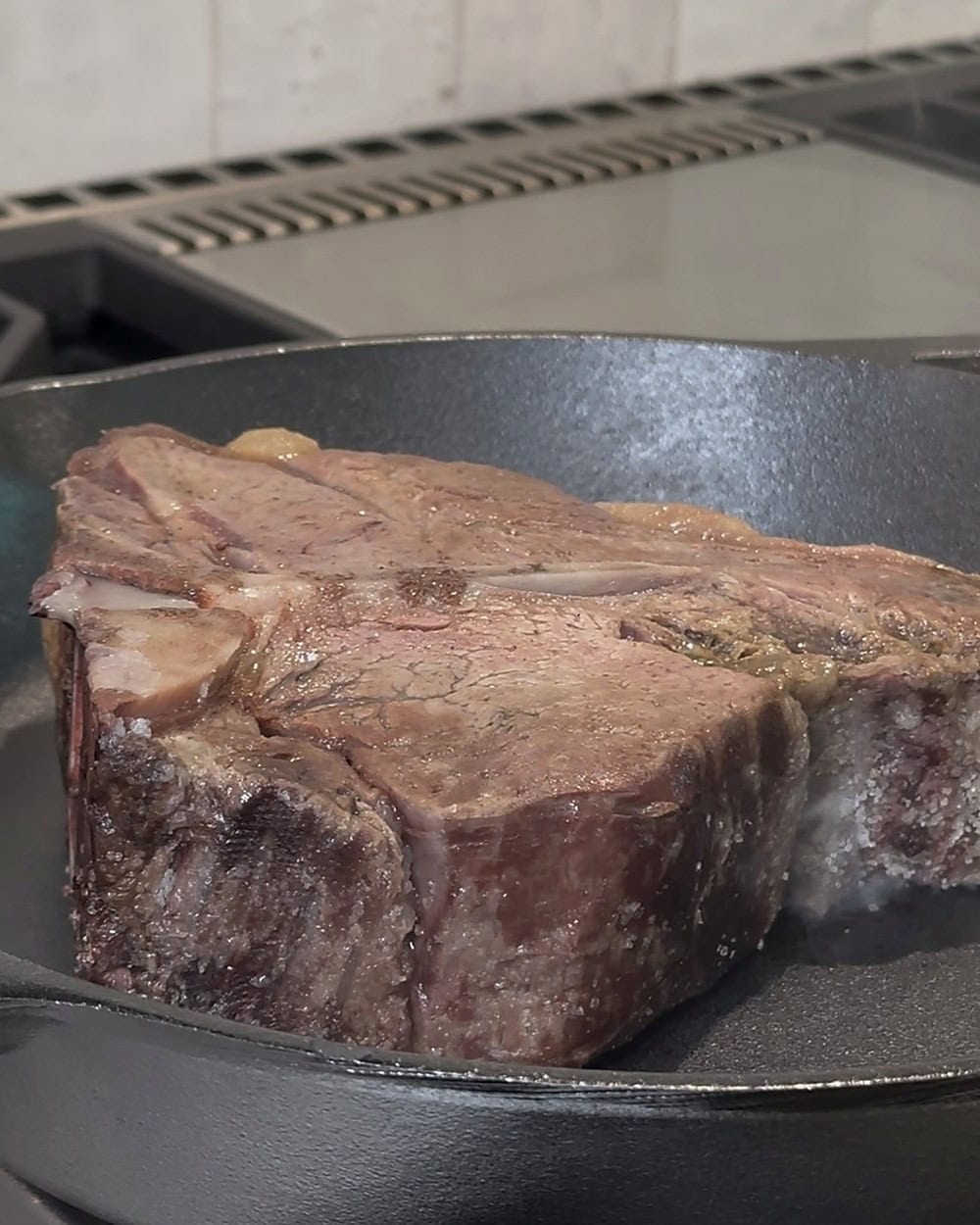
Dry aged porterhouse pressed into a smoking-hot cast iron skillet for the final sear, hard dark crust forming

STEP THREE

Sear

Get the cast iron screaming hot — heavy smoke curling off the pan. Lay the porterhouse in and cook sixty seconds. Flip with long tongs and cook sixty seconds more. Stand the fat cap against the wall of the pan for another minute.

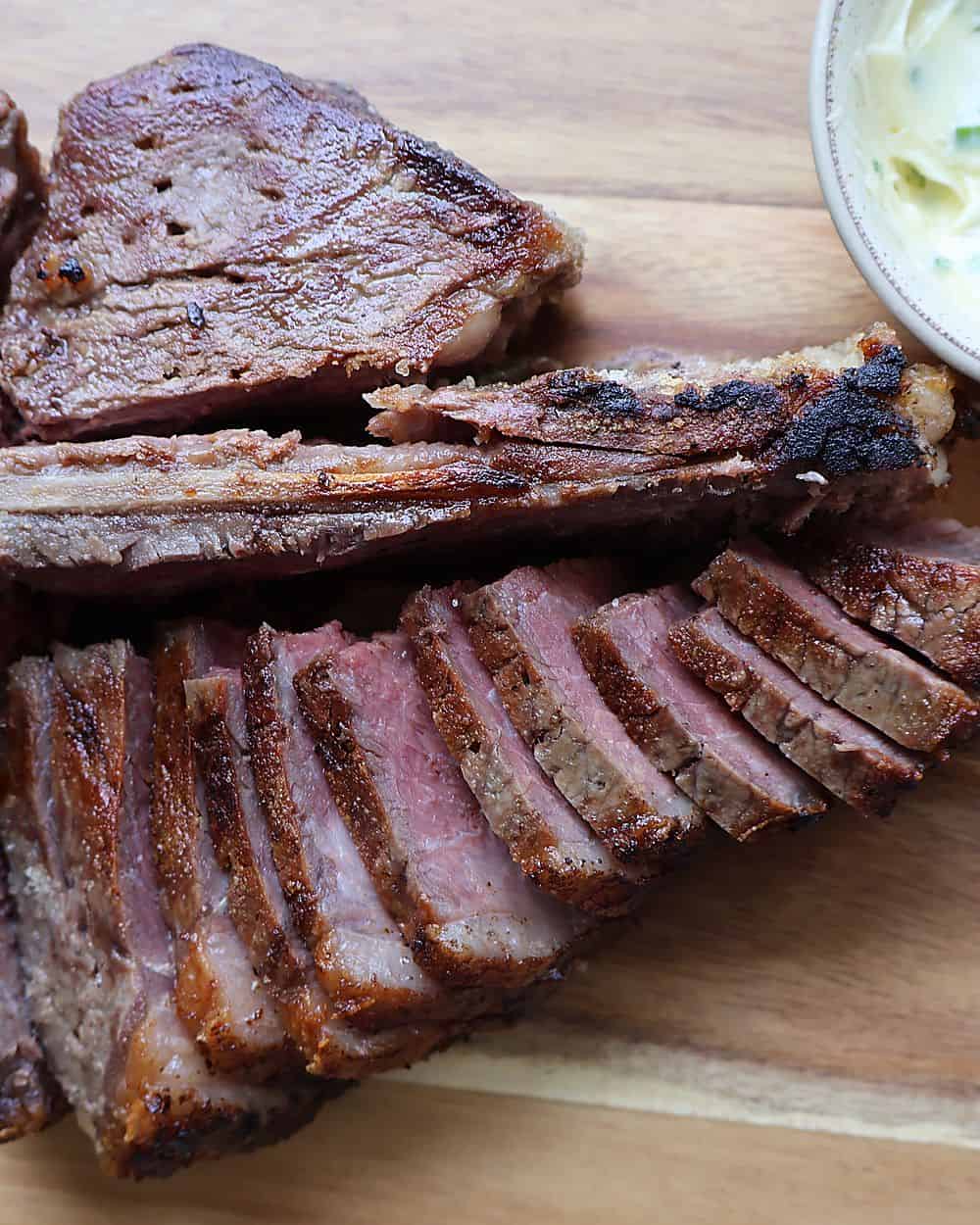
Sliced dry aged porterhouse off the bone on an end-grain cutting board with garlic confit cloves, compound butter, Florida Pure Sea Salt flakes, and a coarse grind of black pepper

STEP FOUR

Rest & Slice

Move the porterhouse back to the cutting board and rest it eight to ten minutes — long enough for the juices to settle.

Run a knife along the bone. The strip lifts off in one piece, the tenderloin lifts off the other. Slice each across the grain and sprinkle with salt and serve.

PORTERHOUSE TIME & TEMP

Choose the thickness. Pick your doneness. We’ll map the cook.

Thicker cuts cook longer. Cast iron carries more carryover than a grill. Set your thickness, choose your doneness, get back to your drink.

Oven Cook90–120min @ 225°F
Pull Temp105°F internal
Sear60sec / side
Final125–130°F after rest
Why a 3-inch porterhouse needs the oven first

A 3″ bone-in porterhouse holds two cuts at once — strip on one side of the T-bone, tenderloin on the other — and the bone runs cool. Try to bring that mass up to temperature on a screaming-hot skillet and the exterior is leather before the center sees 100°F. Reverse the order. Hold 225°F low and slow until the center hits 105°F, then send the steak to a ripping-hot cast iron pan for one minute per side. Even cook from the oven, hard crust from the iron.

OUR FAVORITE FINISHES

THE WAY WE’D SERVE IT.

  • Kosher salt is our first choice. Diamond Crystal if you have it. Morton if that’s what’s in the pantry—just use a lighter hand.
  • Florida Pure Sea Salt brings a clean crunch at the table. Maldon is an easy stand-in if that’s what you have on hand.
  • A dry-aged T-bone follows the same method with a slightly shorter rest. A wet-aged porterhouse cooks just as beautifully, offering a cleaner, sweeter beef flavor in place of the nutty depth that comes with dry aging.
  • Cast iron is still our favorite, but heavy carbon steel builds a beautiful crust too. The goal isn’t the pan—it’s the hea

Storage. Leftovers keep beautifully for up to four days. Warm them gently if you like, but don’t overlook them cold the next afternoon with good mustard and buttered bread. Some steaks earn a second meal. This is one of them.
QUESTIONS FROM THE COUNTER

FROM THE PINE AVE COUNTER

What is a dry aged porterhouse?

A porterhouse is a thick bone-in steak cut from the rear of the short loin — a New York strip on the wide side of the T-bone, a tenderloin on the narrow. Dry aging holds the cut in a temperature- and humidity-controlled case for 28 days or more. The water leaves, the flavor stays, and the beef takes on a deeper, more mineral, slightly funkier edge.

Why pull at 105°F when most reverse sear recipes say 115°F?

Cast iron carries more carryover than a grill. A ripping-hot skillet adds 15 to 20°F to a steak in two minutes; a grill in the same window adds 10 to 15°F. Pulling at 105°F lets the cast iron do its work and still lands you at the medium-rare you wanted. If you switch to a grill finish, raise the pull to 115°F.

Can I grill instead of using cast iron?

Yes — and for a thicker porterhouse, a two-zone grill is the cleanest finish. Slow side at 225°F to 105°F, hot side over live coals for two minutes a side. If the beach rental doesn’t have a grill, the cast iron path works. Just pull at 105°F.

How many people does a porterhouse serve?

A 3-inch porterhouse weighs around 2 to 2.5 pounds on the bone and serves three to four. Cut the strip and tenderloin off the bone, slice each across the grain into thick coins, and the platter goes around the table once for steak and a second time for whoever wants more.

DRY AGED PORTERHOUSE

Prep

12h

dry brine

Cook

2h

total

Rest

18

min total

Yield

3–4

servings

Method

OVEN + IRON

Ingredients

  • 1 dry-aged bone-in porterhouse, 3″ thick (~2.5–3 lb)
  • 2 Tbsp kosher salt (dry brine, night before)
  • Florida Pure Sea Salt Pure Flaked, for finishing
  • Coarsely cracked black pepper, optional, after the sear
  • Optional: 1 Tbsp Cow’s Rule Bleu Cheese & Chive compound butter

Instructions

  1. Pat the porterhouse dry. Season heavily with kosher salt on every face. Rack over a sheet pan; refrigerate uncovered 12–24 hours.
  2. Pull from fridge 1 hour before cooking. Heat oven to 225°F. Insert leave-in probe into the thickest part of the strip, away from the bone.
  3. Slow-roast until probe reads 105°F (90–120 minutes for 3-inch). Pull steak; tent with foil for 10 minutes.
  4. While resting, heat heavy cast iron over high for 10 minutes — pan must be smoking.
  5. Press steak into the smoking dry pan. Sear 60 seconds, flip, sear 60 seconds. Tip onto each edge for 20–30 seconds.
  6. Move to cutting board. Rest 8–10 minutes. Sprinkle Florida Pure Sea Salt across the top. Add pepper now if using.
  7. Run a knife along the bone — strip lifts off one side, tenderloin off the other. Slice both against the grain, half-inch thick.

FROM THE COUNTER

A 3-inch dry-aged porterhouse is a thermometer cook, not a clock cook. The 90-to-120-minute oven window is a guide; 105°F at the strip is the actual cook. Pull when the probe says pull. Cast iron lands the rest.

Dry age handles the seasoning. The thermometer handles the cook.

EXPLORE THE OTHER CUTS

COOKING THE CUT · THE FULL SERIES

← Back to Recipes