COOKING THE CUT · FILET TARTARE
PRIME STEAKS

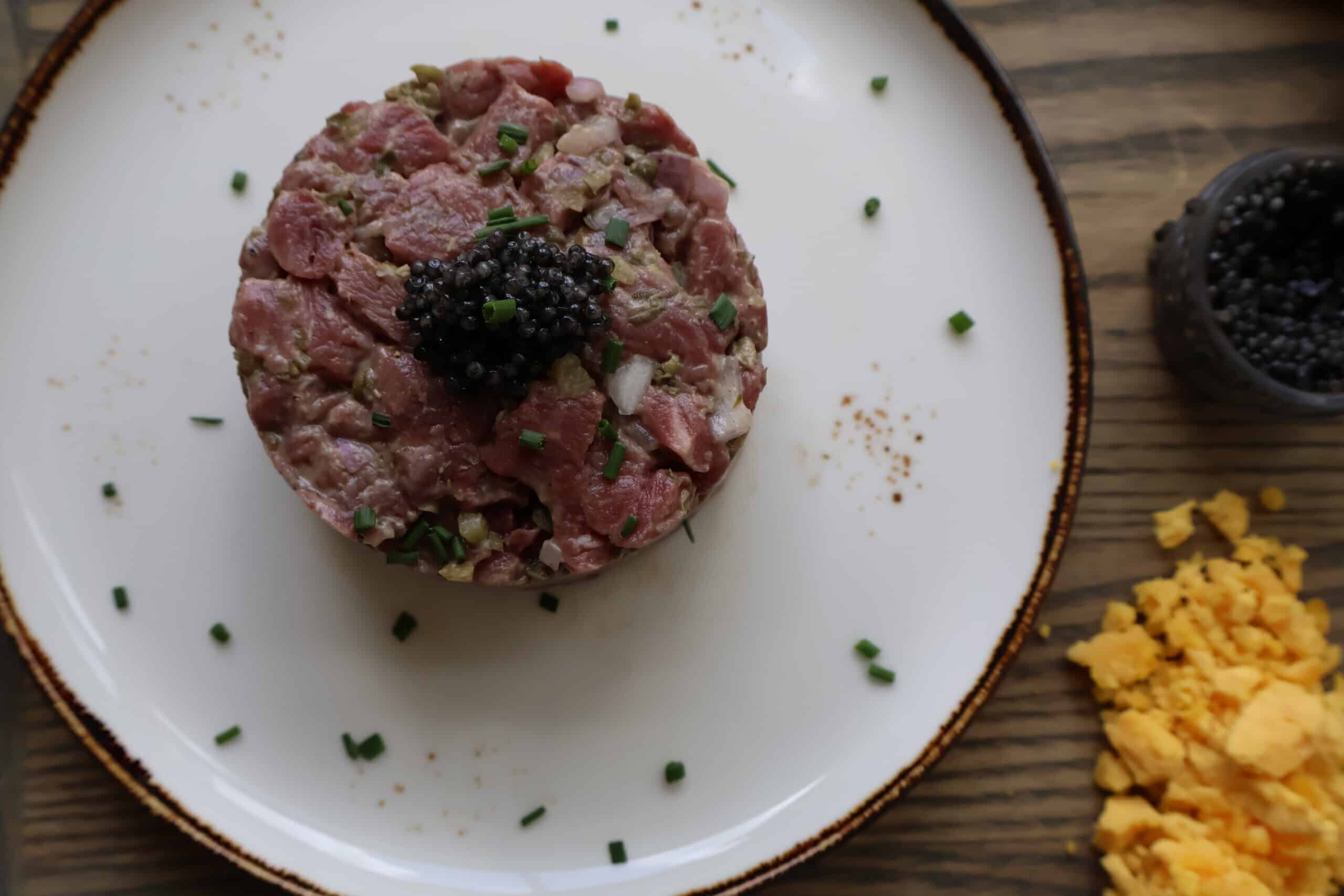
Not every great steak meets the fire. Hand-selected from the Pine Avenue counter, filet is prized for its tenderness, clean flavor, and beautiful texture—qualities that shine just as brightly served raw as they do over the coals. Hand-cut with a knife and dressed with shallot, capers, Dijon, and fresh herbs, this is steak in its purest form.
There’s nowhere to hide in a great tartare, and that’s exactly the point. Every bite depends on exceptional beef, careful knife work, and a handful of simple ingredients that let the filet stay front and center. It’s the same tenderloin we’d happily sear in cast iron—just taken in a different direction. Cooler. Quieter. Every bit as memorable.
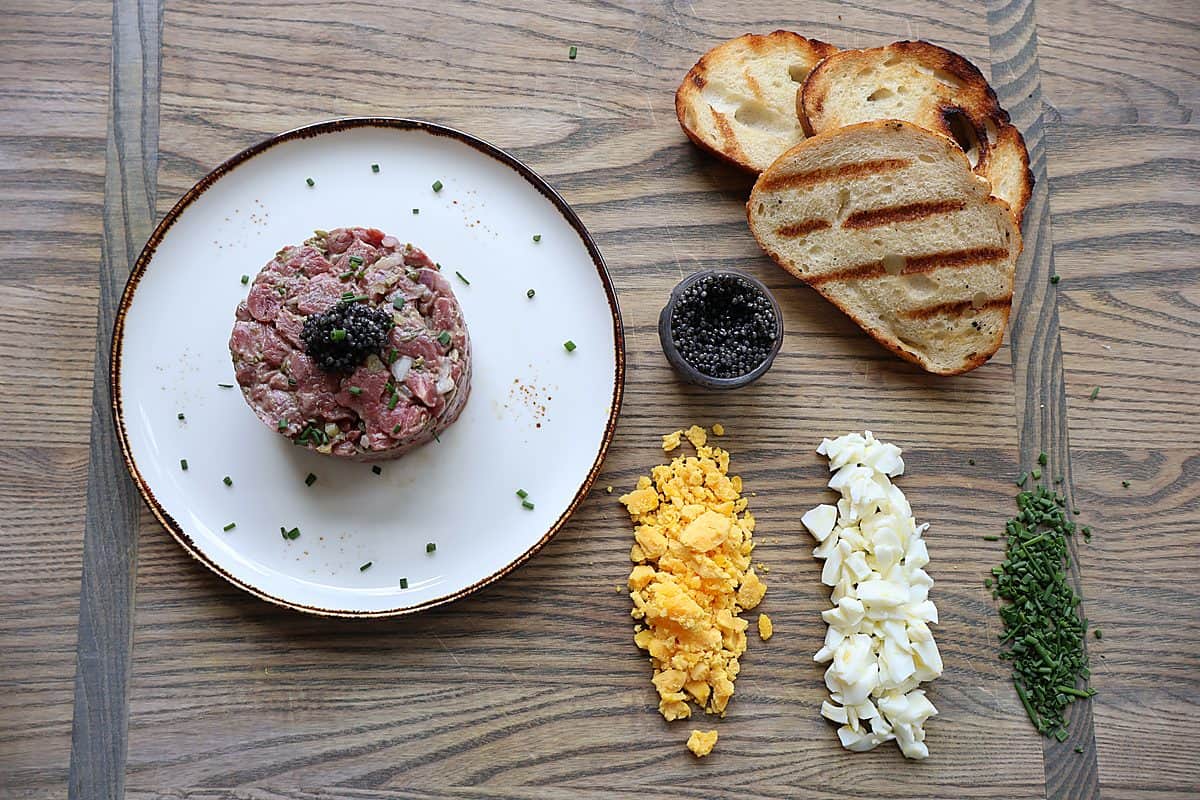
HAND-CUT · SIMPLY DRESSED · BEAUTIFULLY RAW

Learn how to make filet tartare
SHARP KNIFE · COLD BEEF · SIMPLE INGREDIENTS
A great tartare asks for very little: exceptional beef, careful knife work, and a gentle hand. Everything else simply brings the filet into focus.

STEP ONE
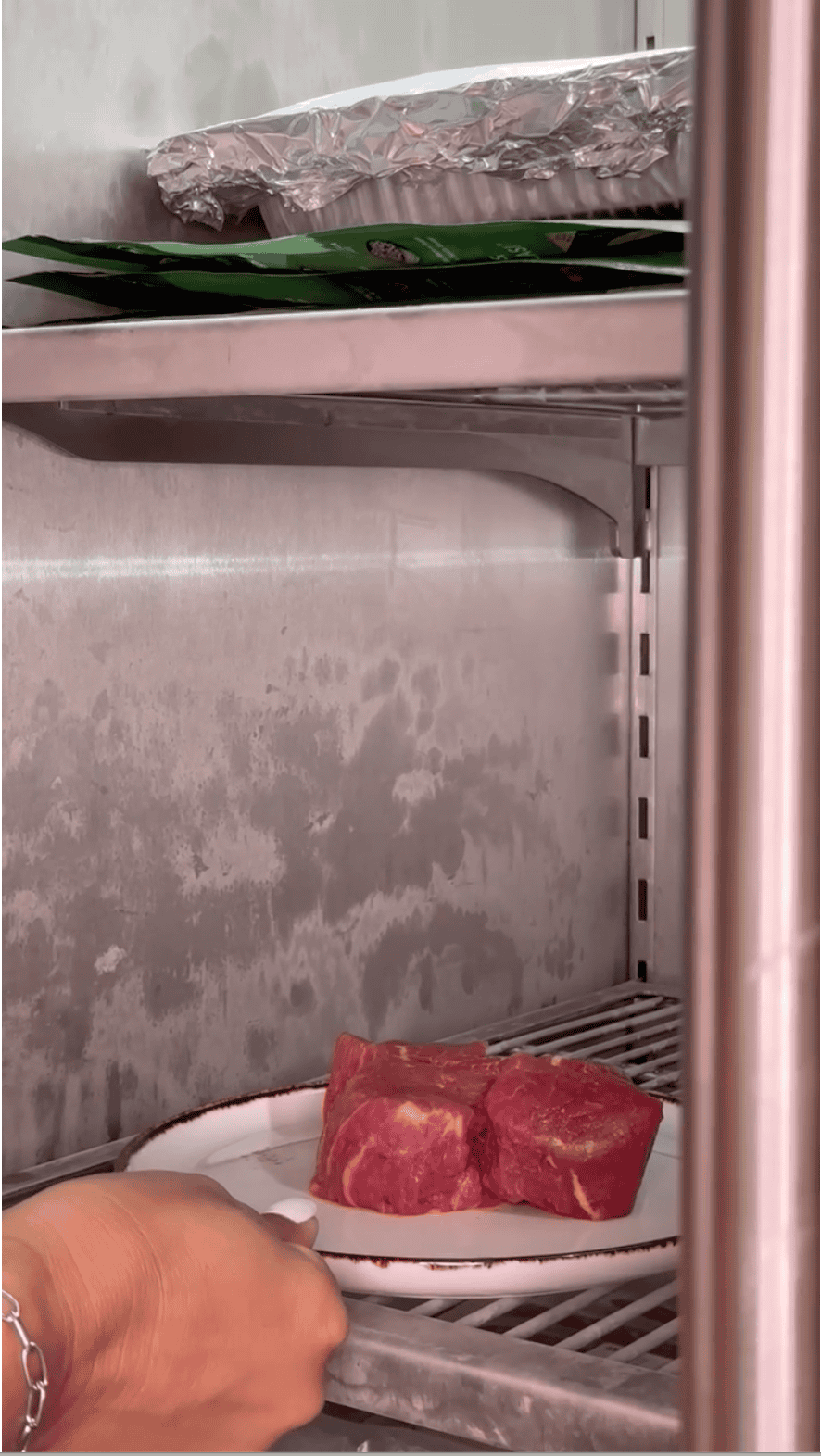
Wrap the filet tightly and place it in the freezer for 15 to 20 minutes. You’re looking for firm edges, not a frozen center.

STEP TWO
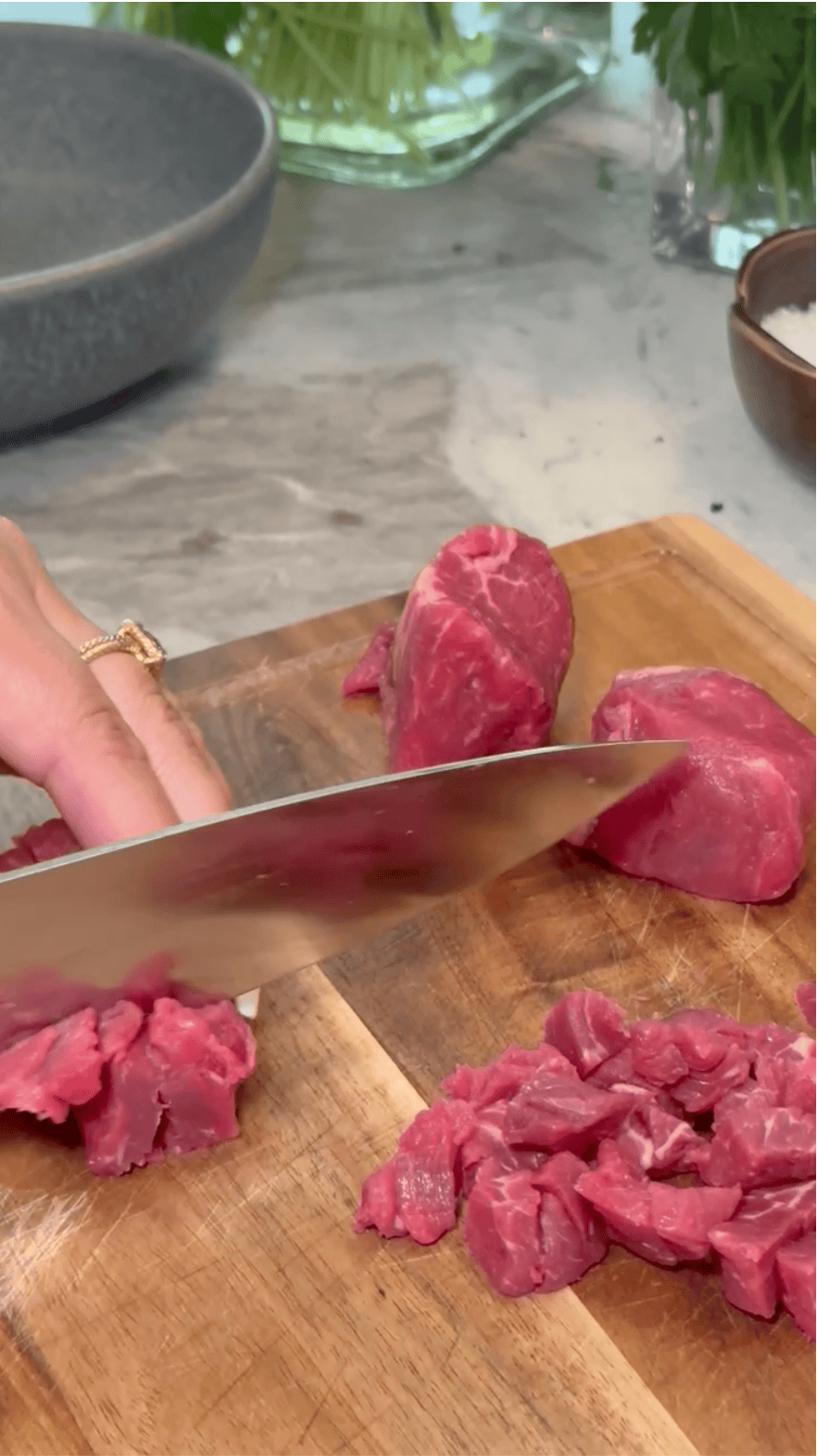
Slice the filet against the grain into thin slabs, then strips, then small, even cubes. Transfer the beef to a chilled bowl as you work.

STEP THREE
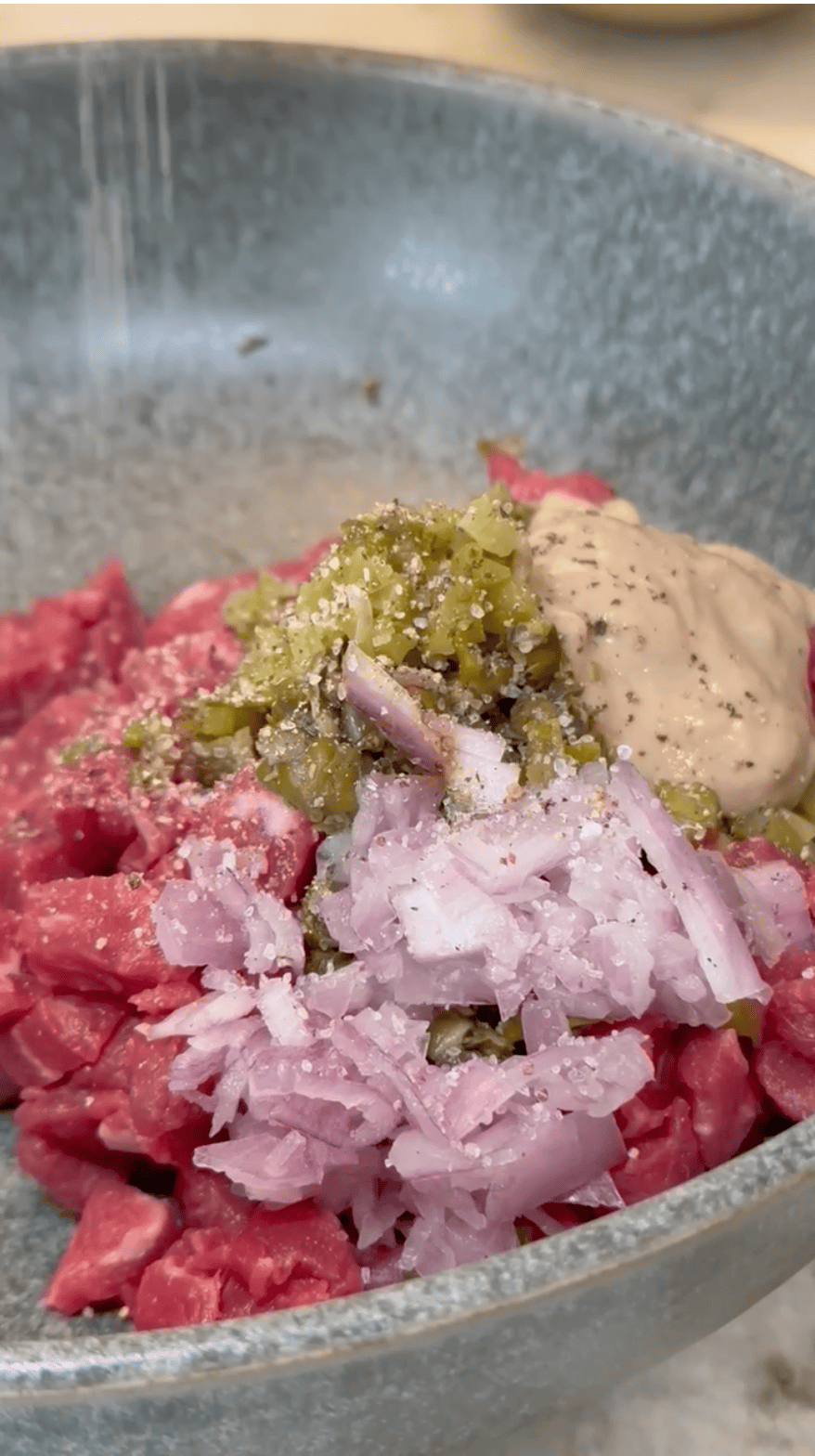
Finely chop the shallot, cornichons, and capers. Fold them gently into the beef with the Dijon and Worcestershire, then season with kosher salt and cracked black pepper.

STEP FOUR
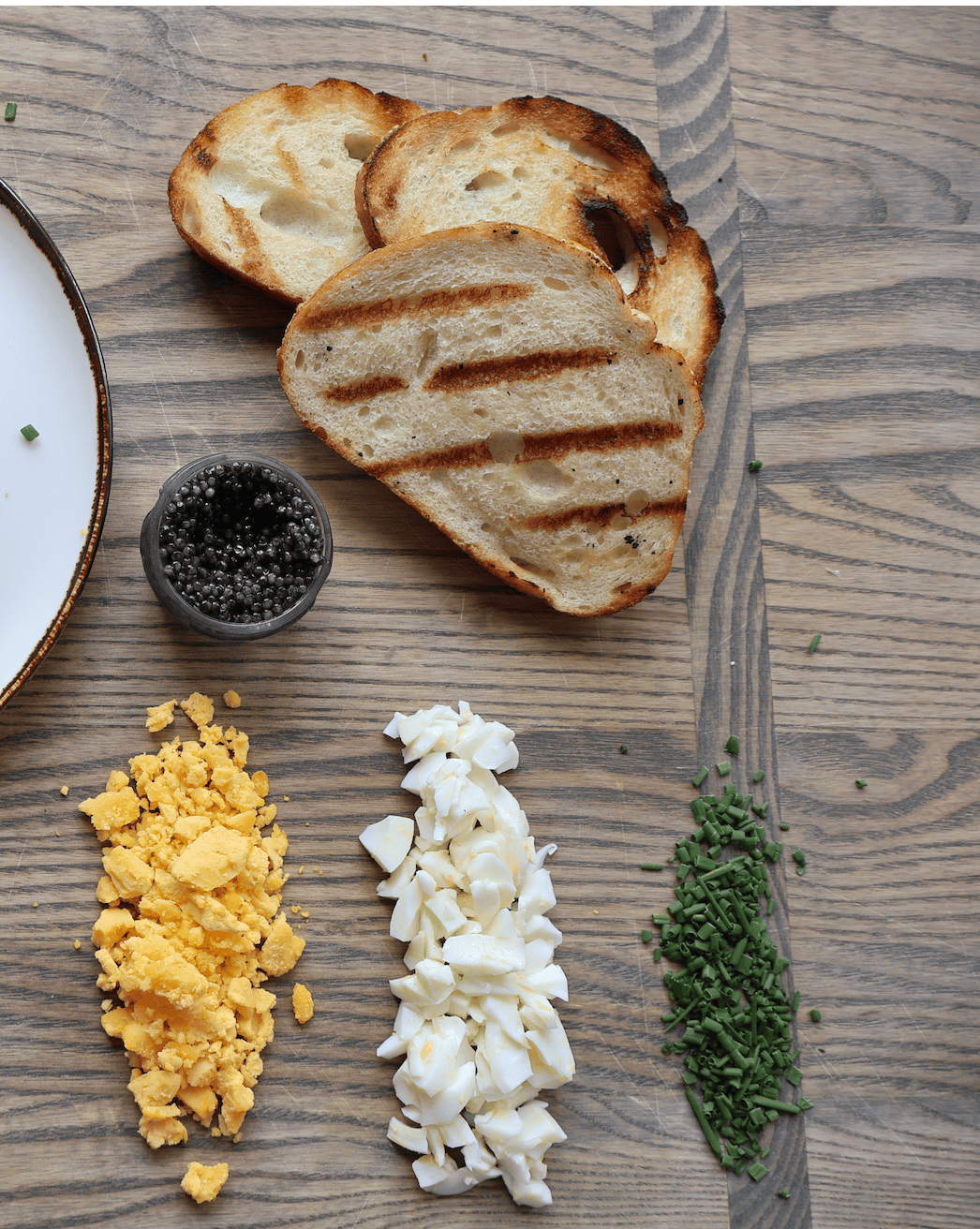
Finely chop the egg and chives, keeping each separate. If you’re serving caviar or a quail egg, have them ready before you plate.

STEP FIVE
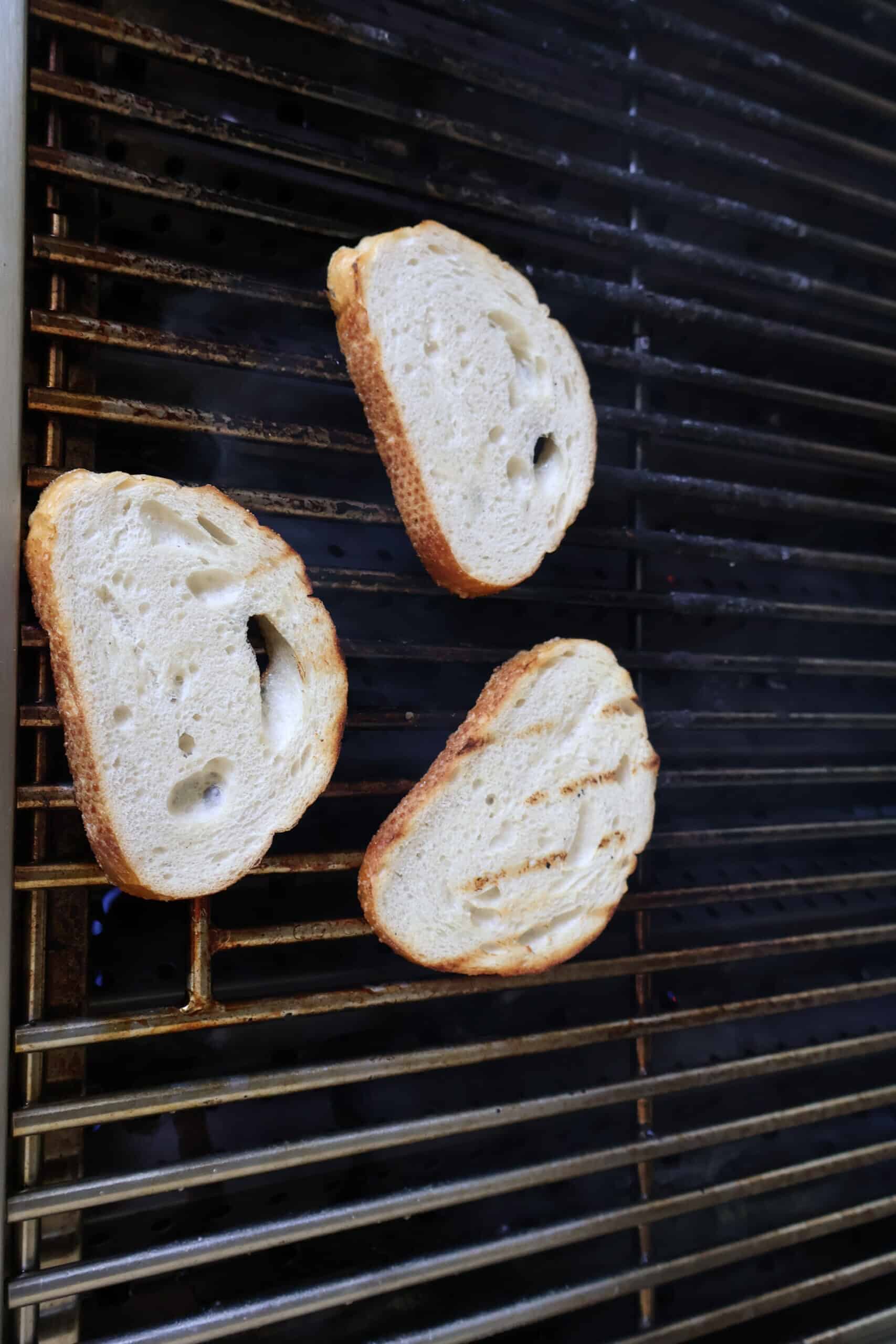
Butter the baguette generously and toast it in a hot cast iron skillet until crisp and deeply golden on both sides.

STEP SIX
Spoon the tartare onto chilled plates, using a ring mold if you’d like a classic bistro presentation. Finish with flaky sea salt, caviar, or a quail egg if the occasion calls for it, and serve immediately with the warm toasted bread.
THE KNIFE, THE CHILL, THE DRESSING — EVERYTHING ELSE FLEXES
Storage. Tartare is meant to be enjoyed fresh. Once dressed, it’s at its best served immediately. If you’re preparing ahead, keep the diced beef chilled and wait to add the dressing until just before it reaches the table.
FROM THE PINE AVE COUNTER
Yes, when it starts with fresh, high-quality beef from a source you trust. Tell your butcher you’re making tartare so the cut comes from the cleanest, most recently broken-down part of the tenderloin. Eat it within two hours of mixing and keep it cold throughout. Pregnant people, very young children, and immunocompromised people should skip it.
Filet is lean, tender, and nearly gristle-free — exactly what matters when the beef isn’t cooked. Top sirloin, trimmed well, is the only real substitute. Fattier cuts like ribeye or strip read strange at room temperature.
Not really. Salt and acid start breaking the beef down the moment everything’s mixed, and the texture goes from clean and bouncy to slack within an hour or two. Dice the filet up to two hours ahead and chop the aromatics early, but combine everything within 30 minutes of serving.
No. The raw egg yolk (or quail egg) cracked into the well at the top is the classic bistro presentation, but it’s a finishing flourish, not part of the base mix. Skip it and the dish still works.
THE RECIPE CARD · PRINT · COOK · PASS THE BOARD

FROM THE COUNTER
Buy your filet from a butcher you trust and tell them it’s for tartare so they cut from the cleanest part of the tenderloin. Eat within 2 hours of mixing. Do not refrigerate leftovers — raw beef plus acid plus salt is a clock. Freeze the filet 15 to 20 minutes before dicing: cold beef cubes cleanly, warm beef tears and turns mushy.
The knife handles the cut. The cold handles the rest.
COOKING THE CUT · THE FULL SERIES