COOKING THE CUT · RIBEYE
PRIME STEAKS

Sous vide takes the guesswork out of a great ribeye. Gentle heat brings the steak exactly where you want it. The sear finishes the story with a beautifully caramelized crust. Steakhouse quality. Island pace
Precision · beautiful CRUST · steakhouse quality
Sous Vide Ribeye — From Bath to Sear
Gentle heat · cast iron · steakhouse finish
Five simple steps. Once the water is up to temperature, the hardest part is deciding what to pour while the ribeye quietly does its thing.

STEP ONE
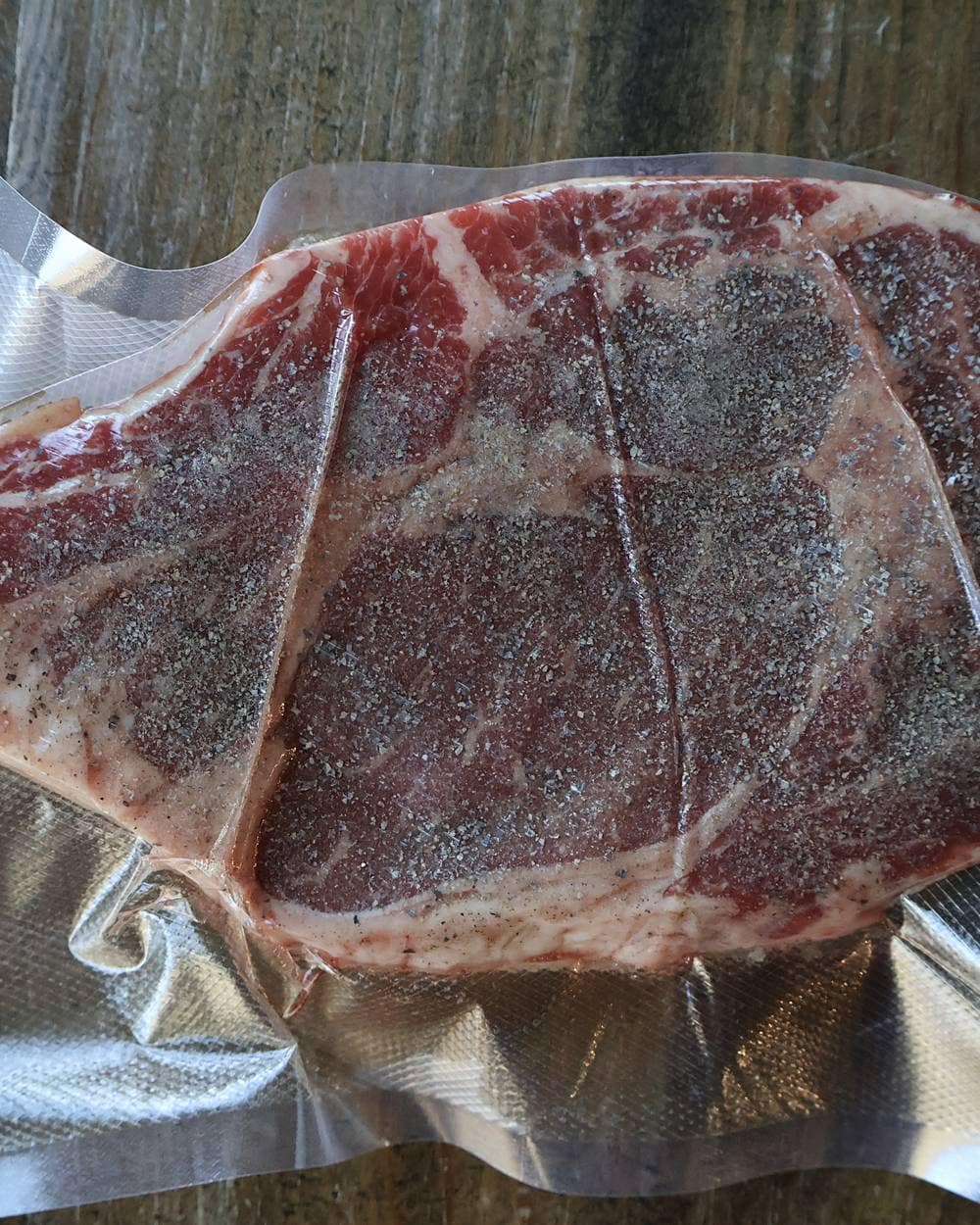
Pat the ribeye dry. Season generously with kosher salt and cracked pepper on both sides. Slip into a sous vide bag. Seal via water displacement or a vacuum sealer.

STEP TWO
Heat the bath to 129°F for medium rare. Submerge the bag, clip it to the side, and let the water cook for 90 minutes to 2 hours. Edge-to-edge pink is locked in at temperature — no overcooking, no carryover to predict.

STEP THREE
Pull the bag from the bath. Lift the ribeye out and discard the bag liquid. Pat the steak very dry on all sides. This is the single most important move before the sear.
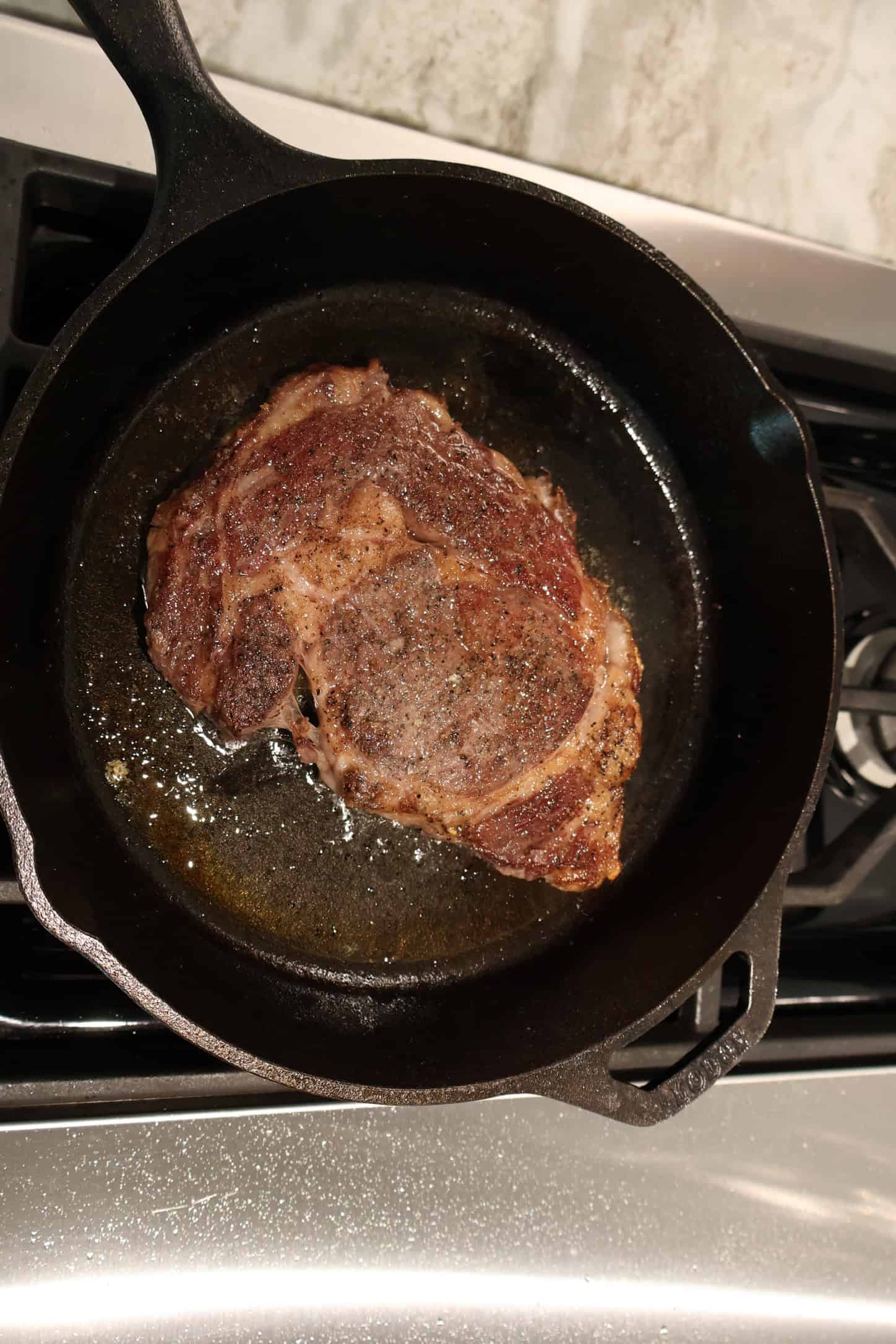
Heat a cast iron over high heat for 5 to 7 minutes until ripping hot. Add a drizzle of neutral oil. Lay the ribeye in, away from you. Sear 60 seconds per side. Stand it on the fat-cap edge for 20 to 30 seconds to crisp.

STEP FOUR
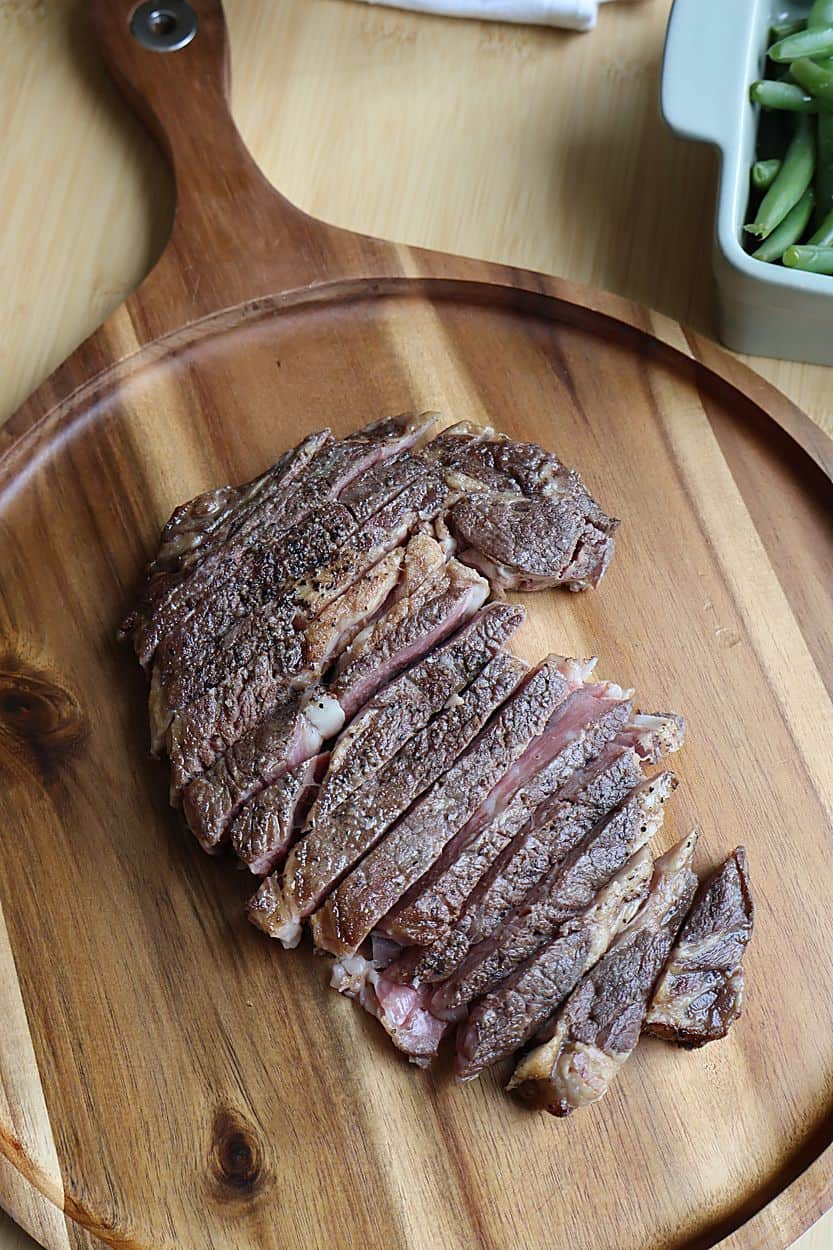
Move to a cutting board. Rest 2 to 3 minutes . Slice against the grain, half-inch thick. Finish each slice with a flake of Florida Pure Sea Salt. Pass the board around.
SET THE CUT · CHOOSE THE FINISH · COOK WITH CONFIDENCE
Choose the thickness and your preferred doneness. We’ll calculate the time and temperature. The final sear and rest stay the same, so every ribeye finishes with the crust it deserves.
Bath time is the minimum. Up to 4 hours at temperature is ideal; beyond 4 the texture starts to break down.
THE WAY WE’D SERVE IT.
Our Favorite Variations
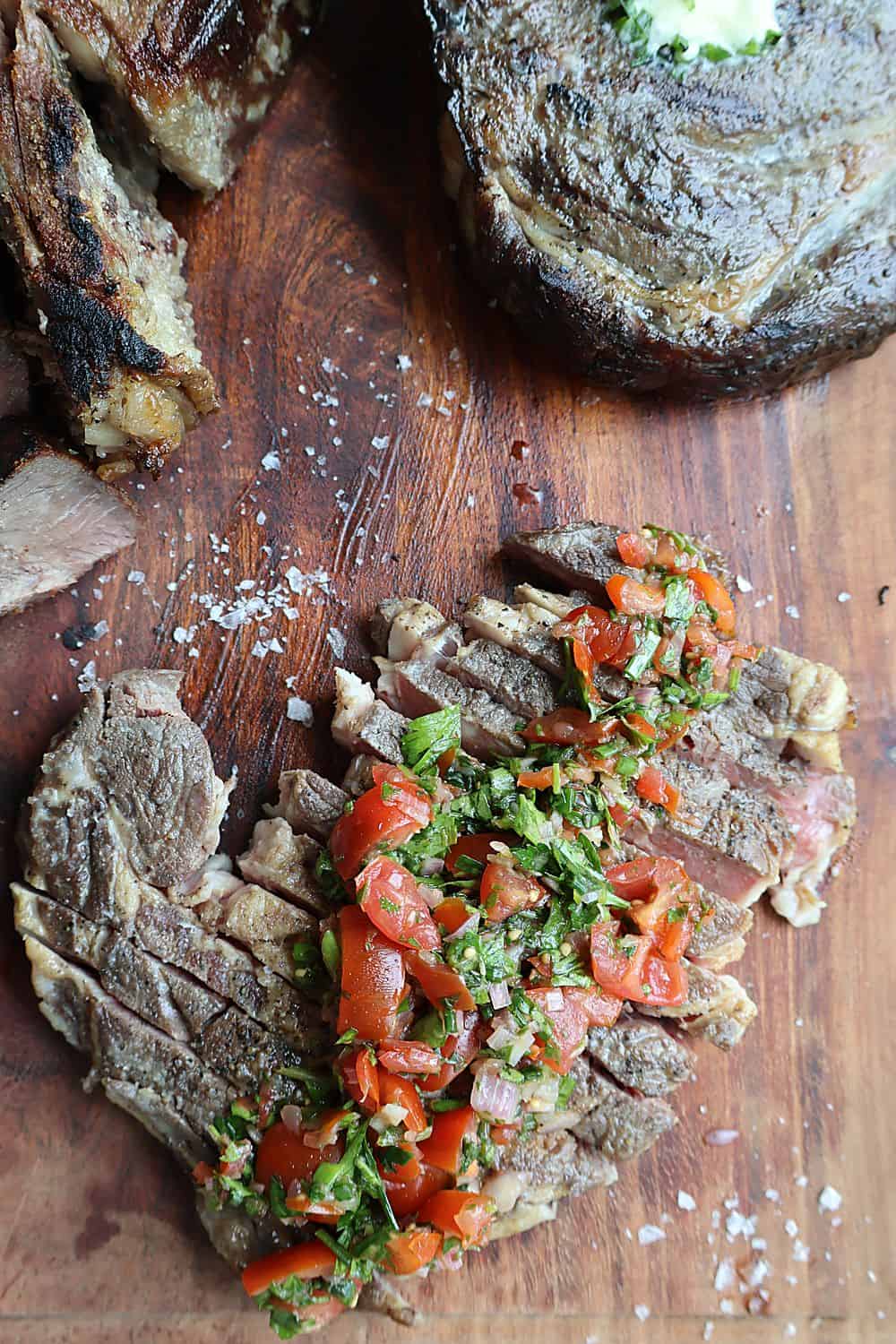
Finishing Touches
Storage. Leftover ribeye keeps beautifully for up to three days. Warm it gently in the sous vide bath if you’d like, but don’t overlook it cold the next afternoon. Layered onto toasted bread with horseradish cream and pickled onions, it might become the meal you look forward to most.
FROM THE PINE AVE COUNTER
Because 129°F is the exact internal temperature for medium rare. Sous vide cooks the steak to that temperature edge to edge and holds it there. There’s no overcooking possible, no carryover to predict. The water is the recipe.
Up to 4 hours at 129°F is safe and ideal. Beyond that the texture starts to break down — the long heat works on connective tissue and turns the cut soft. 90 minutes to 2 hours is the sweet spot.
A wet surface won’t crust. Steam comes off before the Maillard reaction starts. The sous vide bag liquid is the enemy of the crust. Bone-dry surface is what makes the 60-second sear actually work.
Only briefly — 2 to 3 minutes. Sous vide cooks evenly through the cut, so there’s almost no temperature gradient and very little carryover. The rest is mostly to let the surface settle, not to redistribute heat.

FROM THE COUNTER
Sous vide takes the guesswork out. The bath holds the steak at the exact temperature you want, edge to edge. The cast iron does what fire does best: crust, mahogany, sound. No thermometer needed at the bath — the water is the thermometer.
Water handles the cook. Fire handles the finish.
COOKING THE CUT · THE FULL SERIES